

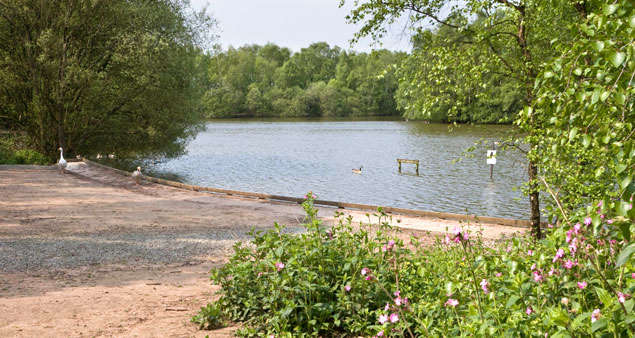
The Council is advising dog owners and other residents visiting Shakerley Mere in Northwich to avoid the water as it may contain toxins hazardous to animal health.
The Council’s Regulatory Services team is reacting to concerns raised about dead birds being found recently at the nature reserve along with presence of blue green algae.
The team also believes that avian botulism may be present in the water at the mere and residents and visitors are being advised of the precautionary measures they should take to protect themselves and their pets.
The risk to human health is considered very low but algal toxins in the water can cause rashes after skin contact and illnesses if swallowed. There is slight risk to animals if they eat a bird that has died of avian botulism.
Residents should avoid entering the water to swim or paddle and prevent their pets from entering the water or drinking from it. Residents and visitors are also urged not to eat the fish at the site or feed the water birds.
Councillor Karen Shore, Deputy Leader of the Council and Cabinet Member for Environment, Highways and Strategic Transport, said: “Blue-green algae naturally occurs in inland waters, and is an important contributor to the aquatic biology of fresh and marine waters.
“However, when there is a shortage of oxygen in stagnant water during warmer weather, the presence of blue-green algae can lead to the production of the bacteria which causes avian botulism. As some birds have died at the mere recently, avian botulism could be present there.
“As a precaution, we are advising dog owners and visitors this summer to avoid the water as it may be hazardous to the health of their pets.”
People should be aware of government advice on avian botulism on the gov.uk website:
http://apha.defra.gov.uk/documents/surveillance/diseases/avian-botulism.pdf
Blue green algae and the botulinum toxin die off in the autumn in cooler conditions.
Avian botulism is a paralytic and often fatal disease for birds, caused by ingestion of toxin produced by the bacterium Clostridium botulinum. Avian botulism outbreaks in wild waterbirds occur relatively frequently in England and Wales. Large numbers of birds may be affected which can result in hundreds of deaths. Outbreaks of avian botulism can last for weeks and may recur. C. botulinum is an anaerobic (oxygen intolerant) bacterium that multiplies in putrefying plant and animal material and is thus often found in lakes in periods of anoxic conditions and poor water quality.
 New bus routes open thanks to council's Bus Service Improvement Plan
 Councillors welcome Government decision not to proceed with Adlington New Town
 Knutsford Bunny Hop Returns for a day of family fun
 Easter boost for hospice as local firm steps up with sweet donation
 Safer walking and cycling route takes shape as first phase of works completes
 Major Restoration Brings 16th‑Century Listed Building in Nantwich Back to Life
 Northwich man convicted of abusing former partners
 Two people charged following drugs warrant in Congleton
 Man banned from Crewe town centre under terms of CBO
 Three men sentenced after stealing thousands of pounds worth of designer clothing
 Two jailed for dealing Class A and B drugs in Congleton
 Boot Out Breast Cancer Ball raises essential funds for Macclesfield Hospital’s Breast Screening Unit
 Cheshire charity launches new autism-friendly forest sessions
 BUXTON OPERA HOUSE VOLUNTEERS STRIKE GOLD AT 2026 TOURISM AWARDS
 Next steps set out for Poynton Pool safety works
 Council’s Holiday Activities and Food programme ranked among top 10 in UK
 1000 stop checks completed and 30 arrested following immigration and night‑time economy operation


Comments
Add a comment